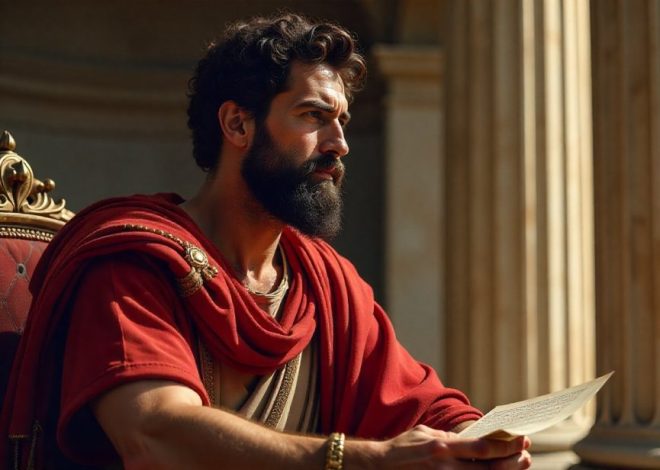
The Enduring Legacy of Cleopatra’s Brilliant Leadership
Discover the extraordinary story of Cleopatra VII, a leader whose intelligence, strategic brilliance, and resilience defied expectations and reshaped history. Far beyond her legendary beauty, Cleopatra was a master diplomat and scholar, fluent in multiple languages and well-versed in politics and culture. Her ability to forge powerful alliances with Julius Caesar and Mark Antony demonstrated her cunning and adaptability—moves designed to preserve Egypt’s independence amid the expanding Roman Empire. Her story is one of resilience, navigating turbulent political waters with wit and foresight, yet her downfall at Actium reminds us that even the most skilled strategists face formidable challenges. Cleopatra’s legacy endures, inspiring modern leaders and challenging stereotypes about gender and power. Her influence—rooted in intelligence, negotiation, and cultural savvy—continues to resonate, prompting us to ask: how can her legacy of strategic thinking and resilience inspire today’s pursuit of leadership and influence?
Cleopatra VII: A Legacy of Power and Intelligence
Cleopatra VII remains one of history’s most compelling figures, her legacy echoing through centuries with enduring fascination. She wasn’t just a beautiful face in the stories of ancient Egypt; she was a shrewd, politically astute leader who understood the true power of intelligence, strategy, and influence. Her story has often been romanticized, but at its core, it’s about a woman who used her wit, education, and determination to navigate some of the most turbulent times in her nation’s history.
Born around 69 BCE into the Ptolemaic dynasty, Cleopatra was part of a lineage that had ruled Egypt for generations after the death of Alexander the Great’s successors. Unlike many of her contemporaries, she was highly educated, fluent in multiple languages, and well-versed in politics, philosophy, and science. Her upbringing prepared her not just to be a figurehead but to be an active, strategic leader capable of shaping her country’s future.
Egypt during her reign was a vibrant crossroads of culture, religion, and commerce. It was a land rooted in tradition yet open to new ideas and influences. Cleopatra understood that her legitimacy depended on maintaining stability and projecting strength, even as she balanced honoring customs with adapting to the shifting political landscape. Her leadership demanded a keen sense of diplomacy, cultural adaptability, and strategic foresight.
What set Cleopatra apart was her ability to wield power with intelligence and finesse. She was a master strategist, knowing when to form alliances and when to stand her ground. Her relationships with Julius Caesar and Mark Antony weren’t merely personal—they were calculated moves designed to preserve Egypt’s independence and her own authority. These alliances exemplified her diplomatic skill, turning potential enemies into allies and demonstrating that leadership in her era was as much about negotiation as it was about military might.
Her story is ultimately one of resilience, adaptability, and the clever use of influence. Cleopatra’s life reminds us that true power often lies in the ability to think several steps ahead, to understand the complex web of political and cultural forces at play. Her legacy endures not just because of her romantic associations but because she exemplified the strength of a leader who used her intelligence and strategic insight to shape her destiny.
The Intellectual and Strategic Genius That Shaped Cleopatra’s Reign
Cleopatra’s leadership was rooted in her exceptional intelligence and diplomatic finesse, qualities that set her apart from many of her contemporaries. Fluent in several languages, including Egyptian, Greek, and Latin, she could communicate directly with foreign rulers and scholars, giving her a significant advantage in diplomacy. Her broad education in philosophy, science, mathematics, and literature made her a true scholar-queen, capable of engaging in sophisticated political and cultural dialogues. This intellectual foundation allowed her to craft nuanced alliances and outmaneuver rivals with confidence.
Her strategic thinking extended well beyond simple diplomacy. Cleopatra understood that influence often depended on understanding her enemies and turning threats into opportunities. She was adept at reading political currents and adjusting her approach accordingly. Whether forming alliances with Julius Caesar or Mark Antony, she demonstrated an ability to leverage her knowledge, charm, and political acumen to strengthen her position. Her skill in navigating complex relationships was essential in maintaining her throne amid internal family rivalries and external pressures.
Cleopatra’s active involvement in governance and cultural patronage reflected her sharp mind and leadership style. She carefully balanced traditional Egyptian customs with Hellenistic practices, reinforcing her legitimacy and appealing to diverse factions within her kingdom. Her understanding of governance, religion, and culture helped foster loyalty among officials and subjects alike, creating a stable foundation even during turbulent times. Her ability to blend these elements showcased her mastery in creating a resilient and adaptable leadership.
Her diplomatic genius was most evident in her ability to forge powerful alliances without relying solely on military might. The alliance with Julius Caesar, for example, was a masterstroke: she famously arranged to be smuggled into the palace wrapped in a rug. This bold move secured her relationship with Rome’s most influential leader and helped her reclaim her throne. Similarly, her partnership with Mark Antony was based on a mix of political strategy and genuine chemistry, allowing her to extend her influence in a shifting geopolitical landscape.
Cleopatra knew that influence was often built through negotiation and strategic planning. She used marriage, political appointments, and diplomatic negotiations to neutralize threats and consolidate her power. Her ability to maintain internal stability while actively engaging externally exemplifies her resilience and foresight. Every decision she made reflected her understanding that leadership required constant adaptation and strategic thinking.
Her mastery of diplomacy extended beyond grand alliances. She skillfully managed Egypt’s internal affairs, rewarding loyalty and neutralizing threats with carefully chosen marriages and appointments. This internal stability was crucial for projecting strength externally. Cleopatra’s ability to analyze situations, seize opportunities, and maintain a flexible approach made her a formidable ruler who turned influence into lasting power.
Throughout her reign, Cleopatra proved that intelligence and strategic thinking are essential for effective leadership. Her capacity to analyze complex situations, forge alliances, and adapt to changing circumstances made her a resilient and influential figure. Her leadership style—a blend of wit, education, and cultural savvy—helped preserve Egypt’s independence as long as possible and set a standard for future leaders navigating turbulent political landscapes.
Mastering Influence: Cleopatra’s Alliances with Rome and Their Lasting Impact
Cleopatra’s relationships with Julius Caesar and Mark Antony were more than personal unions; they were carefully crafted political strategies that played a crucial role in shaping her legacy and Egypt’s future. Her alliance with Caesar helped her regain her throne after a fierce struggle with her brother, Ptolemy XIII. Facing rebellion and external threats, Cleopatra understood that aligning with Rome’s most influential leader was her best chance for survival. Her daring move to be smuggled into Caesar’s presence wrapped in a rug was a calculated act of bold diplomacy, securing her position and gaining Roman support in one swift, decisive gesture.
This alliance with Caesar was a masterstroke. It not only stabilized her reign but also brought Roman resources and influence directly into Egypt. Cleopatra knew her independence depended on balancing her sovereignty with Rome’s expanding power. She skillfully negotiated her interests, turning their relationship into a strategic partnership that protected Egypt’s autonomy amidst the growing Roman empire. Her ability to leverage personal charm into political advantage exemplified her diplomatic finesse and strategic vision.
After Caesar’s assassination, Cleopatra shifted her focus to Mark Antony, with whom she shared a relationship that blended politics and personal chemistry. Their union was a bold statement of defiance against Roman dominance, positioning Egypt as a significant player in the shifting power dynamics of the Roman world. Cleopatra used her influence over Antony to elevate Egypt’s status, challenging Rome’s authority and demonstrating her refusal to be sidelined by the imperial tide.
However, these alliances carried inherent risks. Rome’s growing influence meant Egypt was increasingly entangled in its internal conflicts. Cleopatra’s ties with Caesar and Antony made her vulnerable to shifting Roman political winds. Her partnership with Antony, in particular, became a double-edged sword—while it extended her influence, it also drew Egypt into Rome’s civil wars, risking everything she had fought to achieve.
The Battle of Actium marked the devastating turning point. Octavian’s fleet overwhelmed Cleopatra and Antony’s forces, ending their hopes of resisting Roman expansion. Their defeat not only sealed her downfall but also revealed the limits of her diplomatic and military strategies against an empire that was relentlessly consolidating power. Yet even in defeat, Cleopatra’s mastery in forging influential relationships left a lasting imprint on history.
Despite her fall, Cleopatra’s skill in building strategic alliances demonstrated her extraordinary ability to manipulate influence and navigate complex political landscapes. Her relationships with Caesar and Antony weren’t just personal— they were vital moves in her broader effort to preserve Egypt’s independence and challenge Roman dominance. Her story continues to remind us that influence often hinges on boldness, negotiation, and the strategic use of every opportunity that presents itself.
Her Enduring Legacy: How Cleopatra’s Leadership Continues to Inspire and Reshape Culture
Cleopatra’s influence extends far beyond her lifetime, shaping both history and culture in profound ways. Her legacy as a clever, resilient leader has inspired countless stories, artworks, and modern interpretations of female power and diplomacy. She challenged traditional gender roles, demonstrating that intelligence, political savvy, and resilience are vital traits for any leader—regardless of gender. Over centuries, her story has become a symbol of strength, adaptability, and cunning, inspiring women and men alike to see leadership as rooted in wit and strategic thinking.
Her legacy transformed perceptions of female authority, proving that leadership hinges on more than beauty or charm. Cleopatra showed that influence comes from education, diplomacy, and a deep understanding of power dynamics. This challenged societal expectations and paved the way for future women to lead, highlighting that true authority is rooted in intellect and resilience. Her example continues to resonate today, encouraging a broader view of what it means to be a powerful leader.
Culturally, Cleopatra’s image has been immortalized in countless works—from ancient coins and sculptures to Shakespeare’s plays and Hollywood movies. These stories often emphasize her charisma, intelligence, and strategic mind, reinforcing her status as a symbol of female empowerment and political cunning. Every retelling adds layers to her myth, but the core remains her ability to influence through cultural savvy and sharp diplomacy. Her story continues to inspire artists, writers, and leaders who see her as a model of resilience and ingenuity.
Archaeological discoveries have cemented her lasting impact. Coins bearing her image reflect her authority and Egypt’s vibrant economy, while inscriptions and papyri reveal her active role in governance, diplomacy, and cultural patronage. Artifacts from her reign showcase a blend of Egyptian traditions and Hellenistic influences, emphasizing her skill in adapting cultural symbols to reinforce her legitimacy. These materials depict a leader who used knowledge, diplomacy, and cultural influence to sustain her kingdom’s stability, leaving behind a tangible legacy of resilience.
Her strategic brilliance and resilience continue to shape modern leadership models. Cleopatra’s mastery of diplomacy, negotiation, and cultural awareness remind today’s leaders that influence relies on understanding people, forging alliances, and adapting swiftly. Her life exemplifies how influence is built on wit, emotional intelligence, and the ability to navigate complex environments—lessons that remain relevant in today’s interconnected world.
Her story also sparks ongoing conversations about gender and power. Cleopatra proved that intelligence, diplomatic finesse, and resilience are vital qualities for any leader—regardless of gender. Her success in challenging stereotypes and leading with a clever mix of cultural insight and strategic acumen encourages ongoing movements for gender equality in leadership. Her legacy reminds us that influence rooted in resilience and intellect can leave a mark that endures through the ages.
The Lasting Power of Cleopatra: Lessons in Resilience, Diplomacy, and Vision
Cleopatra’s story endures because it offers timeless lessons in resilience, strategic thinking, and adaptability. She demonstrated that true power isn’t just about authority or conquest but about navigating complex political landscapes with intelligence and grace. Her example encourages today’s leaders to understand people deeply, forge smart alliances, and remain resilient amid setbacks. Cleopatra showed that influence built on insight and perseverance can challenge even the mightiest empires and leave a lasting mark on history.
Her exceptional intelligence and strategic skill were at the core of her success. Fluent in multiple languages and well-versed in politics, science, and culture, she used her knowledge to craft alliances, outmaneuver rivals, and secure her throne. Her ability to adapt swiftly to changing circumstances and leverage her education made her a formidable leader. Cleopatra’s life reminds us that wisdom combined with resilience is a powerful tool for shaping a legacy that endures beyond her time.
The alliances she built with Julius Caesar and Mark Antony exemplify her mastery of diplomacy and bold risk-taking. These relationships weren’t just personal—they were strategic moves to protect Egypt’s independence and challenge Roman dominance. Her daring act of being smuggled into Caesar’s palace wrapped in a rug was a calculated gamble that secured her position. Even as her influence waned, her skill in navigating complex relationships left a legacy of influence rooted in courage, negotiation, and perceptive strategy.
Her defeat at the Battle of Actium marked a turning point, yet her resilience persisted. Facing setbacks with unwavering resolve, Cleopatra demonstrated that true leadership involves learning from failure and adapting quickly. Her ability to persevere under pressure highlights that influence isn’t solely about immediate victories but about maintaining the strength to rise again and keep fighting for what matters most. Her story inspires us to view challenges not as end points but as opportunities for growth and reinvention.
Cleopatra’s life challenges stereotypes about gender and power, proving that intelligence, diplomacy, and resilience are universal qualities of effective leadership. Her legacy continues to inspire movements for gender equality, showing that influence rooted in resilience and intellect can leave an impactful, enduring legacy. Her story reminds us that leadership is a continual journey—shaped by clever strategies, unwavering perseverance, and the courage to challenge the status quo. Cleopatra’s influence remains a beacon for those who seek to lead with strength, wisdom, and resilience across generations.